

Why Winter Pulls Us Closer: The Tender Science Behind Cuffing Season
Discover the science behind cuffing season and why winter naturally makes us crave closeness, warmth, and romance. Learn how cold days spark hearts to connect.
When winter arrives with cold winds, bare trees, and long dark nights, something strange happens: many single people suddenly start looking for a partner to stay close to. This is known as cuffing season. It’s not just a trend on social media—it actually has scientific and biological reasons behind it. As the world becomes colder and quieter, our bodies and minds start pushing us toward comfort, connection, and closeness. Let’s break this down in simple, clear terms with the help of research and real data.
The Natural Instinct Behind Cuffing Season
Cuffing season is not just a cute idea—it can be traced back to our evolutionary past. Scientists say humans act like “seasonal breeders” without even realizing it. Long ago, when winters were harsh, pairing up helped people survive the cold. Staying close meant sharing warmth and improving survival chances.
Research in 2025 from the Leakey Foundation supports this idea: in colder places, people naturally feel more drawn to forming pairs during winter—not for romance alone but also for comfort and security.

What Happens to Our Hormones?
Our hormones shift with the seasons:
• Men’s testosterone drops by around 15% in winter.
This reduces the urge to chase multiple partners and increases the desire for closeness and bonding.
• Women’s testosterone levels increase during autumn.
This boosts interest in forming a connection before winter fully arrives.
• Serotonin levels drop by 20–30% due to less sunlight.
Low serotonin often causes “winter blues,” which makes people crave emotional support and companionship.
• Melatonin levels rise due to longer nights.
This increases sleepiness and even certain kinds of intimate thoughts and behaviors by about 25%.

Search trends also reflect this shift—searches related to intimacy rise by 15–20% in colder months. Studies show people feel more attracted to others during winter, even though we often eat more and gain a little weight. Clearly, the season influences both mood and desire.
The Baby Boom That Proves It All
If you want real proof, just look at birth data.
In the U.S. and many Western countries, September has the highest number of births, around 5–9% more than average. Counting back nine months takes you to December—exactly the time when cuffing season is strongest.
A Royal Society study looked at 78 years of data and found that places with colder winters had stronger baby spikes. A 2024 Springer study showed even twin births follow the same trend. Older records from rural Poland also show clear seasonal birth patterns.
Modern research in 2025 from RMIT adds that holidays, cloudy weather, and festive gatherings heighten emotional closeness and influence when people conceive. Smithsonian’s updated 2025 summary puts it simply: more babies are conceived in winter because people naturally come together when it’s cold.
What the Market Reveals: Condoms, Dating Apps, and Holiday Trends
The business world also shows the impact of cuffing season.
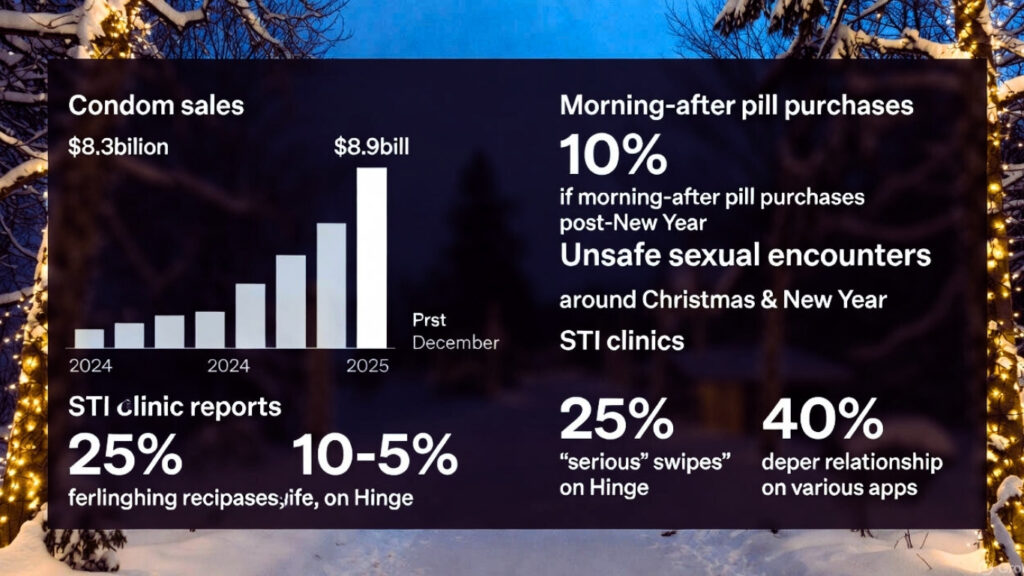
• Global condom sales grew from $8.3 billion in 2024 to $8.9 billion in 2025.
December sales especially increase because people prepare for holiday intimacy.
• Morning-after pill purchases rise by about 10% after New Year’s.
• STI clinics report 10–15% more unsafe encounters around Christmas and New Year.
Dating apps also show strong activity:
• Hinge says “serious” swipes increase by 25% in fall 2025.
• Bumble experts say people try harder to build meaningful connections during this season.
• After the pandemic, apps noticed a 40% increase in deeper relationship intentions during winter months.
Experts on social media even point out that changes in daylight affect our brains, making us more likely to seek companionship as winter begins.
Also Read: Study Exposes the World’s Most Popular Time people watch Porn
The Ups and Downs of Winter Romance
While cuffing season can bring warm, cozy relationships, it isn’t always perfect. Therapists say that these short-term winter relationships can lead to emotional highs and lows—many couples formed in winter drift apart in spring.
TalktoAngel’s 2025 update shows that:
• Cuffing season peaks during holidays
• Most of these relationships fade by spring
But some experts warn that cuffing can become a way to fill emotional gaps temporarily, so it’s important to stay self-aware.
Note: This pattern is strongest in colder countries. Tropical regions don’t experience the same strong seasonal effects because sunlight levels stay more stable.
The season may be cold, but love keeps us warm
So, as winter settles in on December 11, remember this: cuffing season isn’t just a trend—it’s a mix of biology, psychology, environment, and emotion. Our bodies and minds naturally respond to cold weather, shorter days, and the need for warmth and company.
Whether it leads to a lifelong bond or just a comforting winter chapter, this season reminds us that humans are wired for connection. So stay warm, stay open-hearted, and enjoy the magic winter brings—because sometimes the coldest months create the warmest moments.
Also Read: Discreet or Bedroom-Bound? Here’s your ultimate guide to Vibrators You Can (or Can’t) Use in Public
